Five K-pop Aesthetic Signals Shaping 2026
A field guide to five K-pop aesthetics shaping 2026 fashion: AI retrofuturism, toy-like Y2K, dreamcore, ordered chaos, and low-battery beauty.
Five K-pop aesthetic signals shaping 2026
June and July are always crowded with girl-group comebacks. They are also the months when K-pop’s competing visual ideas speak at the same time and at full volume. In 2026, the useful question is not which exact idol item to buy. It is which parts of these visual systems can survive outside an MV.
Five signals stand out: AI retrofuturism, KiiiKiii’s toy-like millennium styling, ILLIT’s low-resolution dreamcore, CORTIS’s ordered chaos, and a deliberately low-battery kind of beauty.
For color-led Y2K execution, see KiiiKiii color combinations for everyday Y2K outfits. For the broader cyber-futurist frame, start with what Y3K aesthetic means.
1. AI retrofuturism moves past silver Y2K
AI aesthetics are taking over the visual language of pop culture. They feel less like a separate trend than the next stage of Y2K.
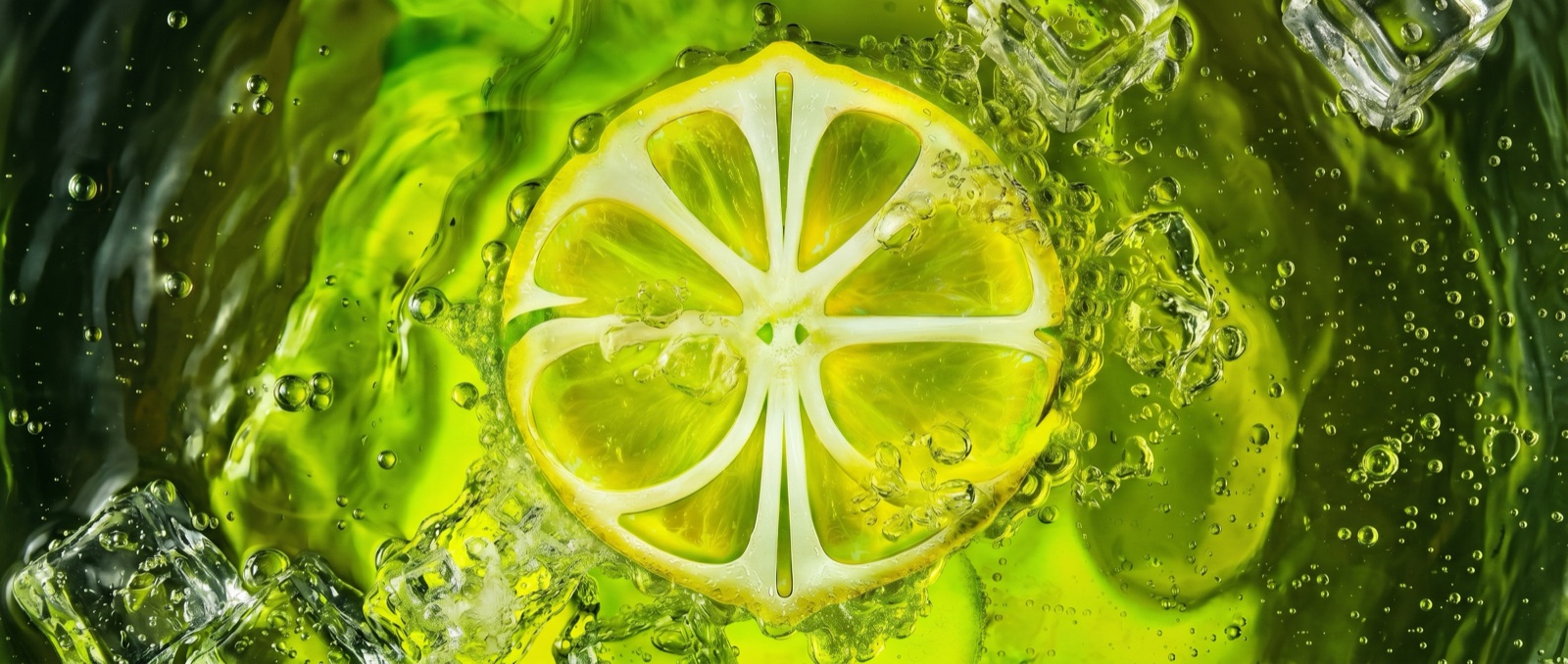
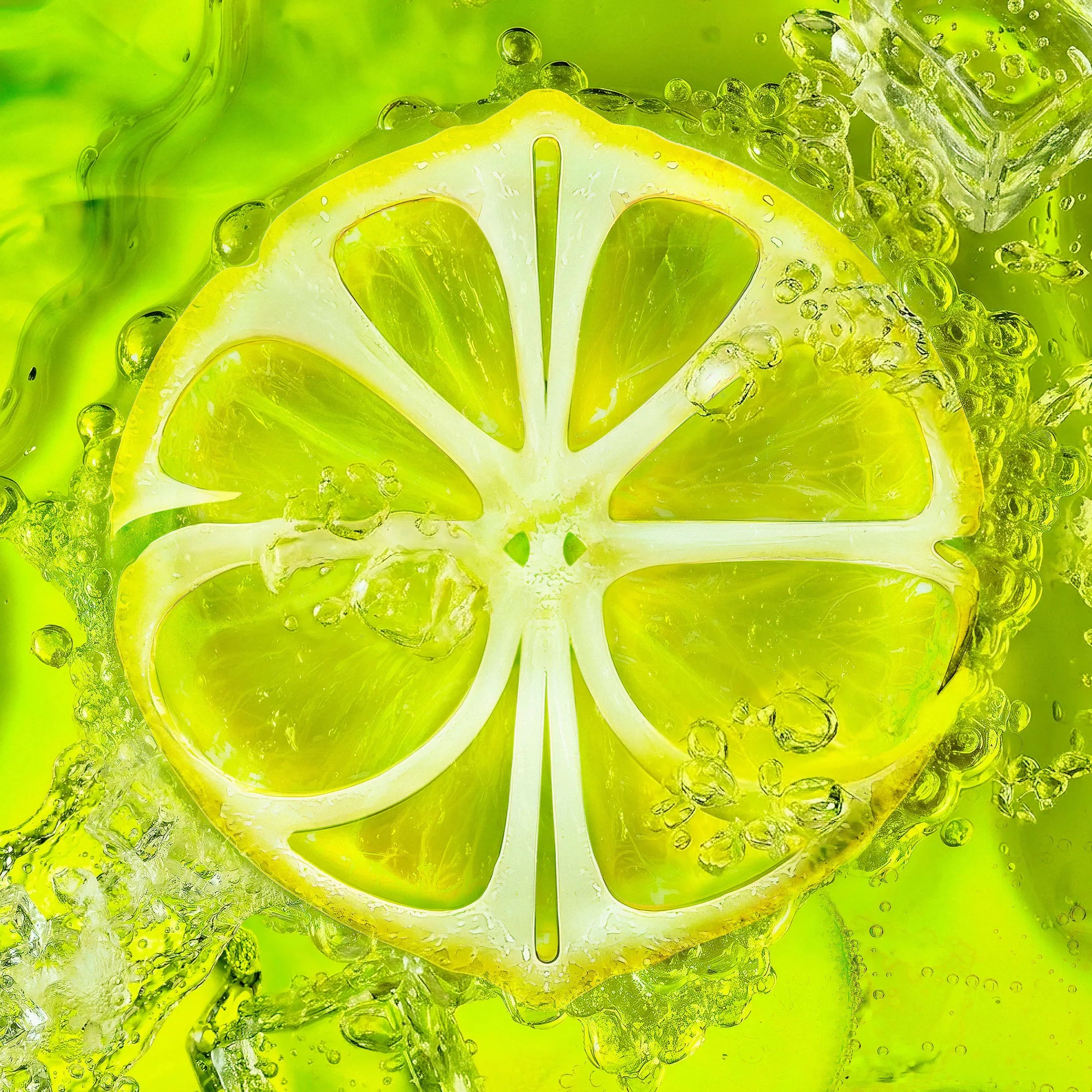
For LEMONADE, aespa stepped outside the familiar silver and icy-blue future. The colour is fluorescent and high contrast, while the effects feel sticky, glossy, and almost overripe. The result is a new kind of retrofuturism: less chrome spacecraft, more synthetic sugar.
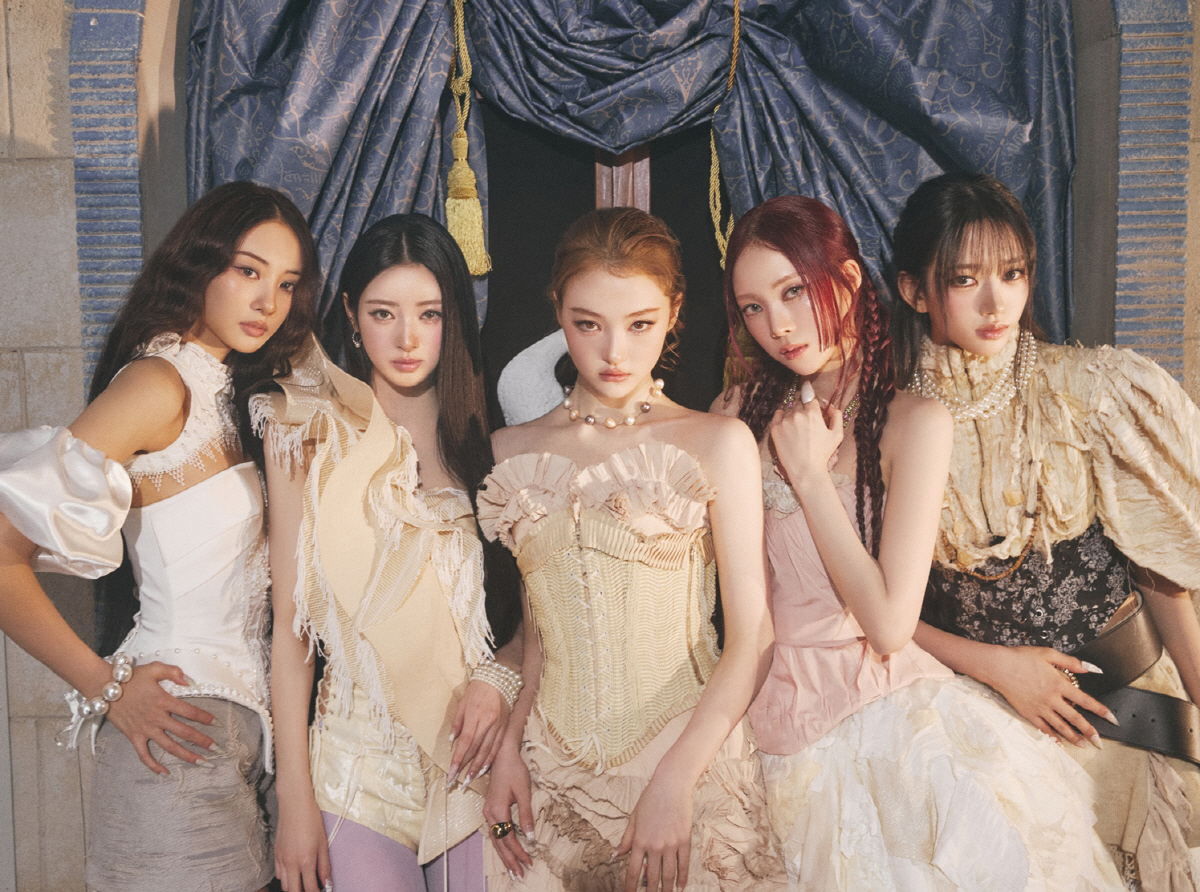
MEOVV’s recent imagery pushes the collision in another direction. Medieval court references meet AI surrealism, and the gap between the two is what makes the images so shocking. Napoleonic military details, which belong to a much later historical period than the medieval references, are part of the broader appetite for ornate uniforms and dramatic structure this year.
The everyday version begins with surface rather than costume. Use a broad, oily highlight and cool-toned blush or lips to create a face that looks perfected almost past reality. Tech sunglasses, sculptural headphones, heavy rings, and arm cuffs do the same work around the body. Silver dental jewellery, as seen in Lisa’s styling, is quieter than a large accessory but still feels secretive and engineered.
2. KiiiKiii rebuilds the millennium from toy-like pieces
KiiiKiii’s 2026 Delulu Pack cycle, led by “404 (New Era),” set off another millennium rush. Colours that had nearly disappeared from current styling came back at full strength. Mint green became especially hard to separate from the group’s summer image.
The accessories feel like an archaeological dig through the early internet: Jelly Firkin bags, odd little hair clips, glitter tattoos, and socks that refuse to disappear under the trousers. Cropped denim reveals bright mid-calf socks or even long leopard-print pairs.
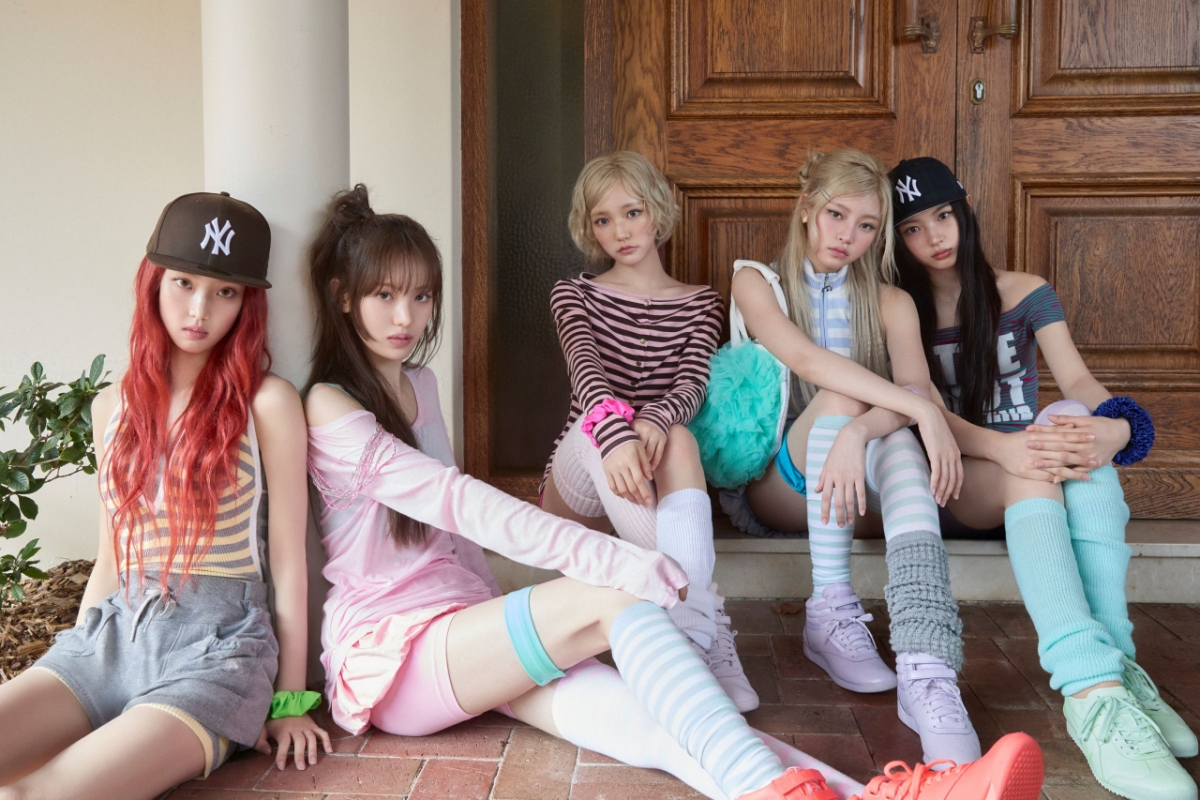
While much of fashion still treats matte leather and expensive restraint as the serious option, KiiiKiii drags cheap, toy-like objects back into the spotlight. This is not a simple millennium replica. The group rebuilds old symbols through the taste of a generation that already knows how strange the original internet looked.
For daily styling, the lesson is permission. Let one concentrated colour interrupt the outfit. Wear the funny clip. Put the loud sock under the cut-off jean. The small object can carry the entire reference. The wearable formula is expanded in KiiiKiii and the anti-polished fantasy-girl formula.
3. ILLIT turns dreamcore into a complete visual system
Dreamcore has become one of the clearest ways to make an image feel native to the internet. It has moved beyond grainy phone footage into full collage systems. ILLIT’s third mini album, bomb, makes that system unusually clear through its GLLIT, PINK BOMB, STAR BOMB, and MAGIC BOMB concepts.
Polka dots return again and again, usually in low-saturation pink, blue, and custard yellow. Stars, ribbons, and shiny surfaces sit beside oversized combs, clips, wired earphones, musical notes, gummies, and wings. Put together, the objects resemble fragments from the early-2000s internet pasted into a soft virtual dream with visible pixel noise. Ashley Williams catches the same frequency in fashion.
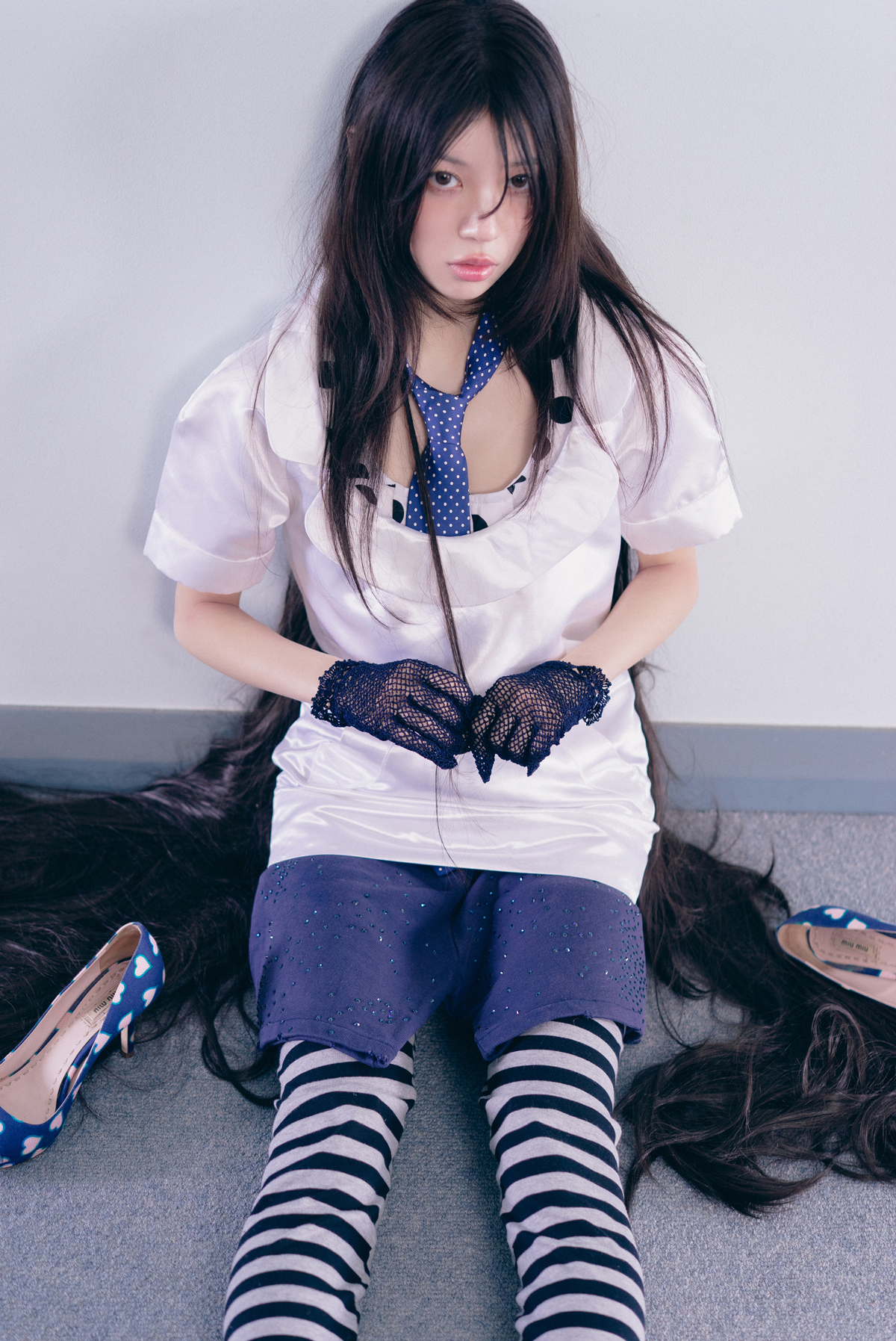
Dreamcore is not an instruction to dress exactly like ILLIT. The more useful move happens through the camera and the edit. A low-resolution image, an awkward crop, or one hazy layer can turn an ordinary corner of daily life into the entrance to a dream. You do not need to become more polished. You need to become slightly less clear.
4. CORTIS makes ordered chaos feel human
Older K-pop styling often appeared to follow a formula designed never to fail. CORTIS crumples that formula and throws it away. Vintage T-shirts from Dongmyo, loose work trousers, and an open refusal to look perfect are the point. Baggy trousers hang on the hips and expose the underwear line. The clothes are casual, but the balance is controlled. Ordered chaos is the core.
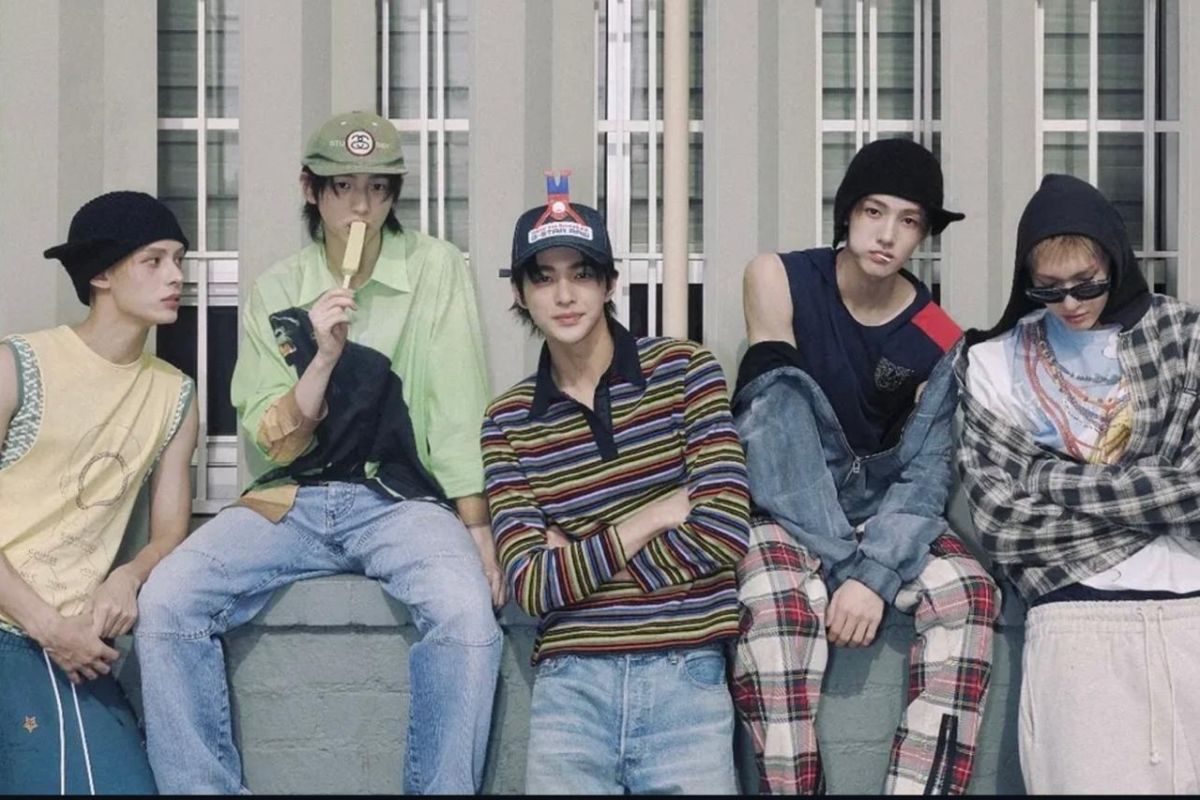
That reading fits the group’s own premise. BIGHIT MUSIC calls CORTIS a five-member team of co-creators and explains that the name comes from “COLOR OUTSIDE THE LINES.” Martin makes the fashion logic more personal in a Weverse Magazine interview: he talks about trying what feels unusual, finding an individual vibe, and trusting what feels natural and comfortable. What once looked weird can become the thing that marks a person’s style.
The daily translation is not to manufacture mess. Start with volume around the hips, a worn T-shirt, or a workwear fabric, then leave one part looking unresolved. Perfect coordination would kill it. For a quieter version of this distance, see how to dress cold without looking loud or overstyled.
5. Low-battery beauty rejects polished perfection
The same logic appears in Chaeyoung and Rei. A few years ago, translucent “born this way” makeup still turned beauty into a contest over who could look naturally flawless. Their answer runs in the opposite direction.
Low-battery eyes, loose contours, and the sense that a face has not been forced fully awake become a gentle refusal of polish anxiety. The effect is not careless. It is simply uninterested in proving perfection.
Across all five signals, K-pop style in 2026 is no longer about chasing an identical item. It helps you find the person you want to become.
Sources
- aespa’s second album LEMONADE release and music video — aespa Japan Official Website, May 29, 2026
- KiiiKiii official discography — STARSHIP Entertainment, accessed July 15, 2026
- “404 (New Era)” by KiiiKiii — Spotify, January 26, 2026
- bomb, ILLIT’s third mini album — BELIFT LAB, accessed July 15, 2026
- CORTIS official profile — BIGHIT MUSIC, accessed July 15, 2026
- MARTIN: “We want to make music that changes the world” — Weverse Magazine, accessed July 15, 2026